
Rauceby Church of England Primary School
Geography
Geography at Rauceby
We believe that a high-quality geography education inspires curiosity and a lifelong fascination with the world and its people. Geography helps pupils to understand places, environments and the physical and human processes that shape our planet, from their local area to the wider world.
Our teaching equips pupils to ask thoughtful questions, interpret maps and data, think critically about environmental and social issues, and understand the interconnectedness of people and places. Through geography, pupils develop respect for diverse cultures, a sense of global responsibility, and the knowledge and skills needed to engage confidently with the challenges of their future.
What we aim to deliver
- Know and understand key physical and human geographical features of the UK and the wider world, including climate zones, biomes, rivers, mountains, settlements and trade.
- Understand how physical processes (such as erosion, the water cycle and tectonic activity) and human processes (such as urbanisation and economic activity) shape and change places over time.
- Be able to use and apply geographical vocabulary accurately, including terms relating to location, scale, interdependence, sustainability and diversity.
- Develop secure map skills, including the use of atlases, globes, digital mapping and grid references, and interpret a range of geographical sources such as diagrams, data and photographs.
- Use fieldwork skills to observe, measure, record and present findings about their local area and beyond.
- Understand global interdependence and environmental challenges, and appreciate their role as responsible, informed global citizens.
Oracy in Geography
Oracy plays a central role in primary geography teaching, enabling pupils to develop and articulate their understanding of the world through purposeful talk. Across the curriculum, opportunities such as whole-class discussions, small group enquiry tasks and collaborative learning experiences allow children to ask thoughtful questions, share ideas and justify their thinking about geographical concepts and processes. The consistent use of subject-specific vocabulary—such as terms related to location, scale, interdependence and sustainability—supports pupils in communicating their knowledge accurately and confidently. In addition, structured discussion, questioning and the use of sentence starters help to scaffold pupils’ spoken language, ensuring all learners can participate and develop their voice. Through activities such as fieldwork, data analysis and presentations, pupils are encouraged not only to describe and explain geographical phenomena but also to evaluate and reflect, strengthening both their oracy skills and their ability to think critically about the world around them.
How we teach our Geography Curriculum
Geography is taught in by class teachers. Lessons are planned in line with the school’s long-term curriculum map, ensuring progression of knowledge and skills across year groups. Learning objectives are adapted to meet the needs and stages of development of pupils in each class. 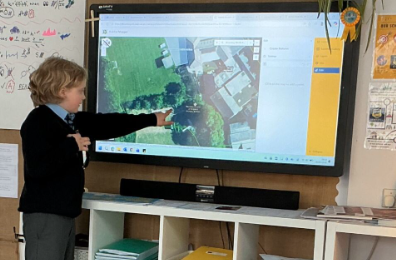
The teaching of geography may include:
- Whole-class teaching to introduce new concepts and vocabulary
- Use of maps, atlases, globes and digital mapping tools
- Small group discussions and collaborative enquiry tasks
- Analysis of photographs, diagrams, data and satellite images
- Fieldwork in the local area to observe, measure, record and present findings
- Practical activities such as map-making and model construction
- Use of high-quality texts to support geographical understanding
- Individual and group research projects
- Educational visits to enhance learning beyond the classroom
- Visitors or virtual links to broaden pupils’ global awareness
Opportunities are provided for pupils to apply their geographical skills across the curriculum where appropriate. The above list is not exhaustive and will be adapted to suit the needs of our pupils and the local context of the school.
Lesson Structure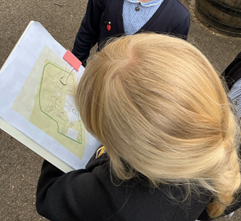
Geography lessons in primary education are typically structured to support clear progression in knowledge and skills while promoting active engagement and understanding. Lessons often begin with whole-class teaching to introduce key concepts and vocabulary, providing a strong foundation for learning. This is followed by a range of activities such as small group discussions, collaborative enquiry tasks and the analysis of maps, data or images, allowing pupils to explore and apply their knowledge in meaningful contexts. Practical experiences, including fieldwork, map-making and the use of digital tools, further reinforce learning by making it relevant and hands-on. Throughout the lesson, questioning and discussion are used to deepen understanding and develop oracy, while tasks are adapted to meet the needs of all learners. Lessons typically conclude with opportunities for reflection or assessment, enabling pupils to consolidate their learning and demonstrate their understanding of key geographical ideas.
How we evaluate our Geography curriculum?
Geography is evaluated through a structured approach that reflects the sequence of learning within lessons and across topics. Building on a clear lesson structure—where pupils are introduced to key concepts, engage in discussion and enquiry, and apply their knowledge through practical activities—assessment is used to capture progress over time. A key method of evaluation is the use of age-appropriate “knowledge dumps,” completed at both the beginning and end of a topic. These allow pupils to demonstrate what they already know and what they have learnt by responding to lesson learning questions, providing a clear measure of knowledge development. This approach enables teachers to identify gaps, adapt future teaching, and ensure progression, while also giving pupils the opportunity to reflect on and articulate their understanding of geographical concepts.
Geography Beyond the Classroom 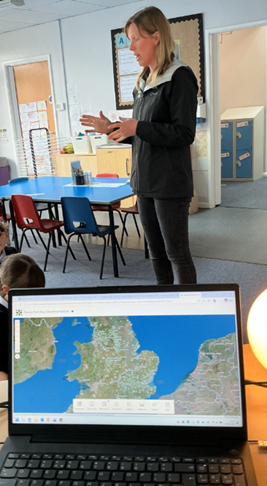
Geography learning is extended beyond the classroom to provide pupils with meaningful, real-world experiences that deepen their understanding of geographical concepts. Educational trips, such as visits to places like the Malham Cove in the Yorkshire Dales, allow children to observe physical features and processes firsthand, making learning more memorable and relevant. The use of the outdoor environment, including the school grounds and local area, supports fieldwork opportunities where pupils can observe, measure and record geographical information in context. In addition, activities such as orienteering in P.E lessons help to develop map-reading and navigation skills in a practical and engaging way. These experiences enrich the curriculum by encouraging exploration, curiosity and the application of classroom knowledge to the wider world.